workflows active: 44 last morning round: Thu 07:00 last deploy: 2026-09-03
Forbes / B2B 2019 TO PRESENT

The demand engine

Built the B2B demand generation function from $0 to eight figures in marketing-influenced revenue, tracked through Salesforce contact-role attribution and conservatively counted.

Problem

Forbes made its money on audience and advertising. The B2B side needed real pipeline, and when I picked this up there was nothing behind it. No capture, no nurture, no routing. Nobody could say whether marketing had ever touched a dollar.

What I built

Capture and nurture

Paid media, email, landing pages, nurture, and funnel reporting, built as one system from the start. I taught myself HTML and CSS because I got tired of waiting on the design queue, then shipped my own templates, landing pages, and tracking scripts. Nurture runs in Pardot, from onboarding through reengagement.
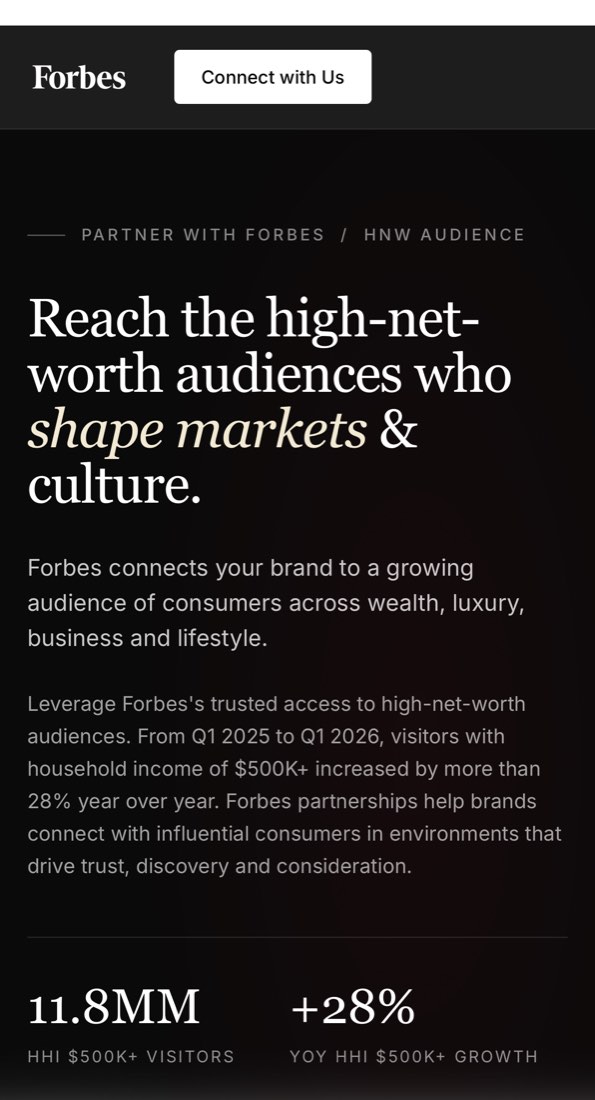
A Forbes partner landing page on a phone: reach the high-net-worth audiences who shape markets and culture, with audience stats beneath
A capture page, the public side of the machine.
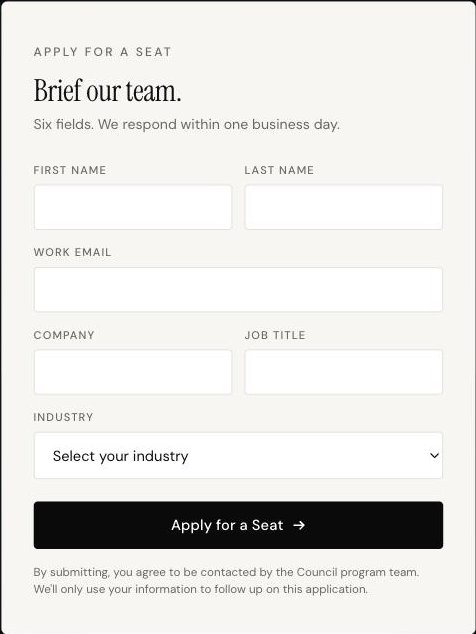
A six-field capture form, sample edition: first and last name, work email, company, job title, industry, and an apply button
The capture form behind a page like it, sample edition from the pitch kit.

Attribution and routing

Contact-role attribution in Salesforce, conservative on purpose, so it holds up when somebody pushes on it. Speed-to-lead standards and routing rules, built with sales in the room. And a one-click outreach library for sellers, which they used because it sat where they already worked.

The mechanism behind the ~2.5x forbes b2b / who does what, in order Marketing Sales Capture forms and pages Nurture onboard, reengage Route speed to lead Work the lead outreach library Close contact role logged Attribute conservative count ~2.5x conversion improvement across capture, nurture, and routing; dashed: attribution reads the closed opportunity
The mechanism behind the ~2.5x.

Reporting and the Performance Console

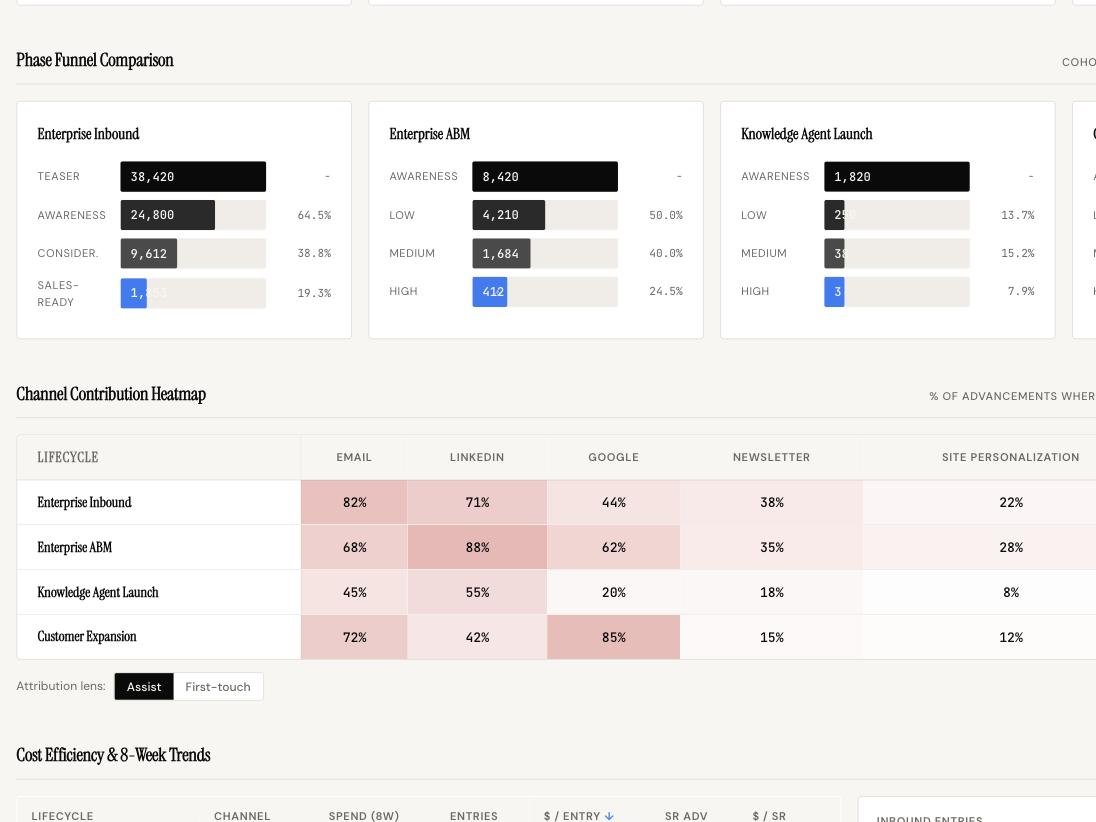
The Performance Console in Looker, plus the QBR and monthly reporting that tie campaign work to pipeline, accounts, and channel efficiency. Every stage reports into that layer, and it is where the influenced-revenue number comes from. The bigger strategy piece sat on top of it: moving the business from monetizing pageviews to monetizing known people.

The console, sample edition: phase funnel comparison by lifecycle and a channel contribution heatmap across email, LinkedIn, Google, newsletter, site personalization, BlueConic, and landing pages
The console, sample edition: funnel drop-off and channel contribution. Live numbers stay internal.

Stack

salesforce / pardot / blueconic / looker / ga4 / bigquery / linkedin ads / google ads / meta ads / gam

Outcome

Marketing-influenced revenue went from zero to eight figures. Influenced means a campaign touched a contact with a role on the closed opportunity in Salesforce. It's a conservative count, and it's a different claim than sourced or direct-booked.

Conversion improved about 2.5x over the same stretch, mostly from tightening capture, nurture, and routing.

Acquisition paid / content / partner CDP 18m+ profiles Lifecycle nurture / reengage CRM routing speed to lead Sales outreach library Measurement performance console / qbr frameworks / contact-role attribution dashed: every stage reports into the same measurement layer, which is where the influenced-revenue number comes from yellow outline: the parts I own
The whole engine on one plate.